5 Spaces Where Sound-Absorbing Panels Are Essential
The Critical Role of Acoustic Treatment
Sound quality profoundly affects human experience in the built environment. In spaces where noise is uncontrolled, reverberation, echo, and excessive ambient sound levels can undermine communication, reduce comfort, impair cognitive performance, and even create safety hazards. Sound-absorbing panels address these challenges by reducing reflected sound energy, controlling reverberation time, and creating environments where speech intelligibility and acoustic comfort are optimized.
Understanding where acoustic treatment is most needed and why is essential for architects, designers, and facility managers who want to create spaces that perform as well as they look. The acoustic quality of a space is often the difference between an environment that people enjoy and one they actively try to avoid.
Here are five spaces where sound-absorbing panels are not merely beneficial but essential for achieving the intended function and user experience of the environment.
1. Auditoriums and Performance Venues
Auditoriums present some of the most demanding acoustic challenges in architecture. These large-volume spaces with hard, reflective surfaces, including polished floors, plaster walls, and hard ceilings, can produce excessive reverberation that muddies speech, degrades musical performance, and frustrates audiences. Sound-absorbing panels strategically placed on rear and side walls control late reflections while preserving the early reflections that contribute to a sense of spaciousness and acoustic richness.
The specific requirements vary by use case, and getting the balance right requires careful analysis. A lecture hall prioritizes speech intelligibility and requires shorter reverberation times, typically between 0.6 and 0.8 seconds. A concert venue balances clarity with warmth, targeting reverberation times of 1.5 to 2.0 seconds, using a combination of absorptive and diffusive treatments. In multi-purpose auditoriums, variable acoustic elements, including retractable curtains and deployable panels, allow the room's acoustic character to be adjusted for different program types.
2. Gymnasiums and Athletic Facilities
Gymnasiums are notorious for poor acoustics, ranking among the most acoustically challenging indoor environments. Large open volumes, hard floor surfaces, concrete or masonry walls, and metal roof decking create an environment where sound reverberates for three to six seconds, making verbal communication nearly impossible at normal speaking levels and creating a cumulative noise environment that exceeds safe exposure levels during active use.
Sound-absorbing panels rated for impact resistance are essential in these spaces, controlling reverberation while withstanding the physical demands of athletic activity, including direct ball impacts and accidental contact. Ceiling-mounted baffles and wall panels designed specifically for gymnasium environments significantly improve speech intelligibility for coaches and instructors, reduce the acoustic fatigue that excessive noise causes for occupants, and create a more controlled environment for spectator events.
Research has shown that reducing reverberation time in gymnasiums from over four seconds to under two seconds dramatically improves the ability of coaches to communicate with athletes and reduces the stress-related health effects of prolonged noise exposure on both staff and students.
3. Open-Plan Offices
The open office has transformed workplace collaboration, but without proper acoustic treatment, it can also become a significant source of distraction and stress that undermines the very productivity it was designed to enable. Research published in the British Journal of Psychology has shown that irrelevant speech is one of the most disruptive factors in open-plan environments, reducing cognitive performance by as much as 66% on memory-intensive tasks.
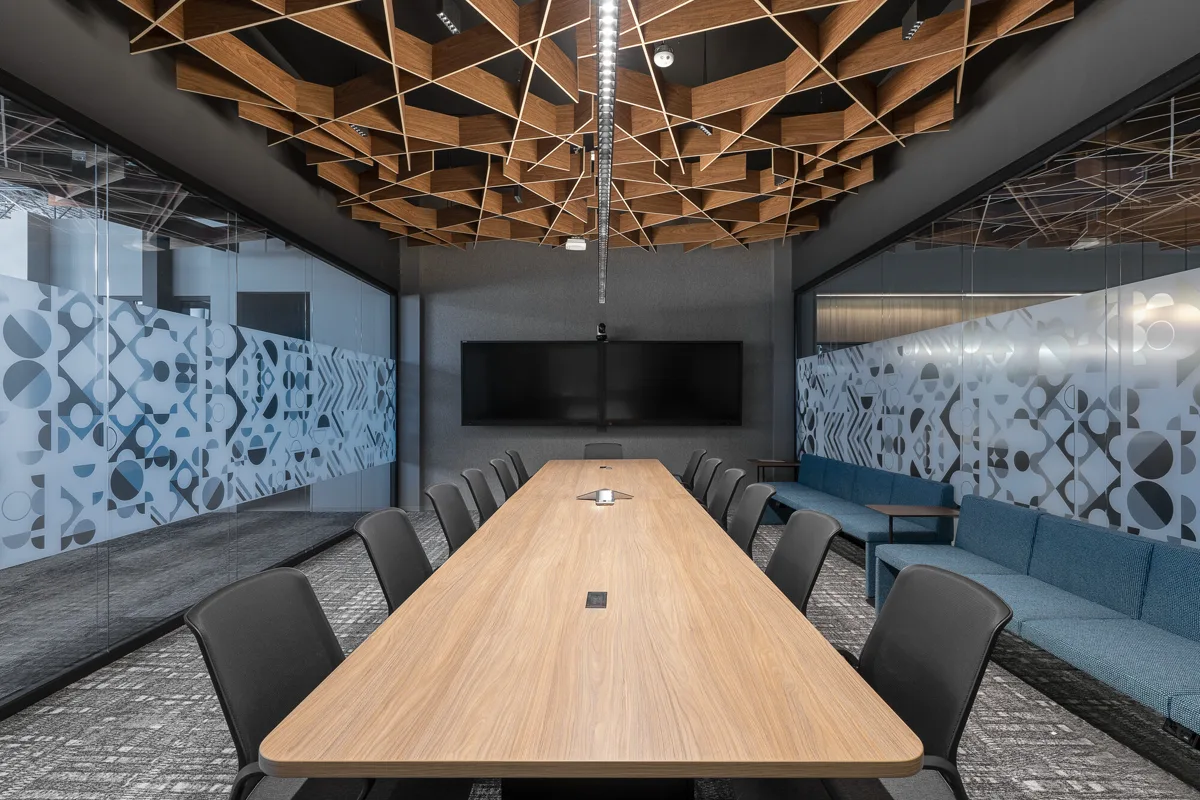
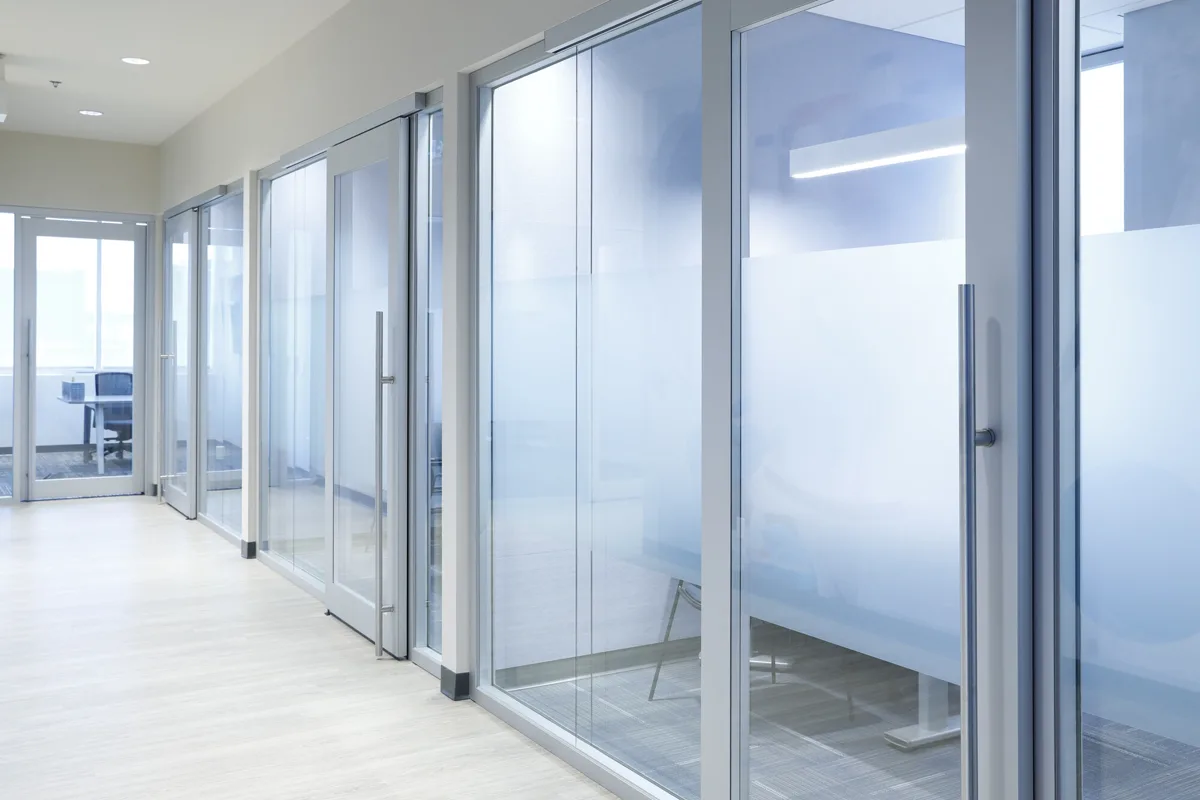
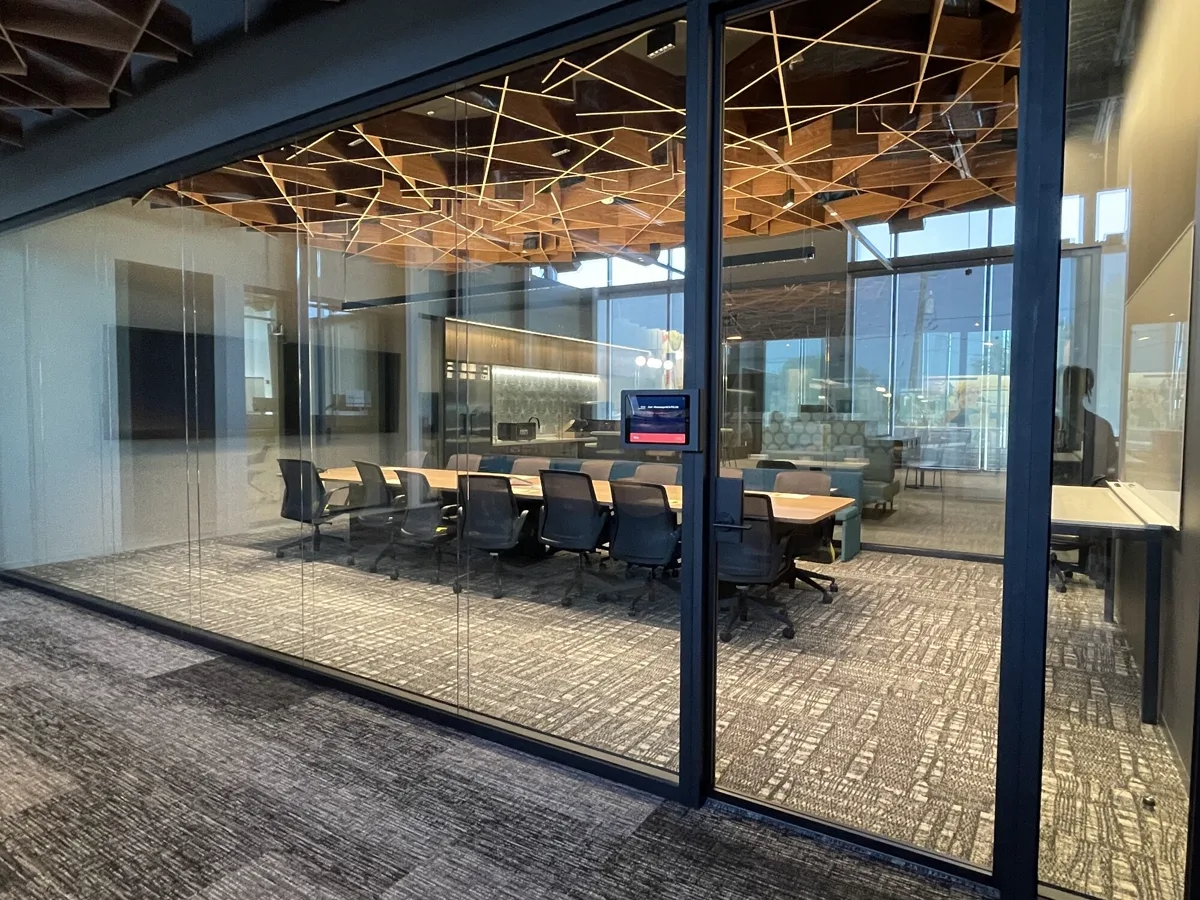
Sound-absorbing panels, combined with architectural glass wall systems, create an effective layered acoustic strategy for open offices. Ceiling-mounted absorbers reduce overall ambient noise levels and control reverberation across the floor plate. Desk-mounted screens provide localized privacy for individual workstations. And glass partition walls with appropriate STC ratings create acoustically isolated zones within the open plan for meetings, calls, and focused work.
Rampart's moodwall systems complement acoustic panel strategies by providing transparent boundaries with STC ratings from 27 to 45, creating private offices and meeting rooms that are visually open but acoustically separated from the surrounding workspace. This layered approach, combining absorption, isolation, and masking, delivers the best acoustic outcomes in open-plan environments.
4. Cinema and Screening Rooms
In cinema environments, acoustic precision is paramount. The audience experience depends on clear, immersive sound reproduction, which requires careful control of room reflections, resonances, and background noise. Sound-absorbing panels on walls and ceilings prevent flutter echo and standing waves that can color the sound, reduce bass clarity, and diminish the impact of the carefully mixed audio tracks.
Professional screening rooms, corporate presentation theaters, and home cinemas all benefit from acoustic treatment tailored to their specific dimensions and use cases. Strategically placed absorptive panels at first reflection points, combined with bass trapping in corners and low-frequency treatment on rear walls, create a controlled acoustic environment where the sound system performs as intended and every seat delivers a premium listening experience.
The goal in cinema acoustics is not to create a dead, anechoic environment but rather a controlled one where the room supports the content rather than competing with it. This balance requires careful material selection and placement, guided by acoustic measurement and modeling.
5. Restaurants and Event Venues
Hospitality spaces face a unique acoustic challenge: creating an atmosphere that feels energetic and vibrant without becoming uncomfortably loud. In restaurants, excessive noise is consistently cited as one of the top three complaints from diners, and it directly affects satisfaction, return visit rates, average check size, and online review scores. A study by Zagat found that noise is the number two complaint among restaurant diners, second only to service.
Sound-absorbing panels, ceiling clouds, and acoustic baffles reduce overall noise levels while preserving the conversational energy that contributes to a lively atmosphere. The goal is not silence but controlled acoustics, where guests can converse comfortably at normal voice levels without raising their voices or straining to hear their companions.
For event venues that host a range of functions from corporate conferences to banquets to live performances, adaptable acoustic treatment is essential. Movable panels, adjustable curtain systems, and demountable partitions allow the acoustic character of the space to be tuned for each event type, ensuring optimal conditions regardless of the program.
Integrating Acoustic Solutions
Effective acoustic design is rarely about a single solution. The best results come from combining sound-absorbing panels with architectural elements that control sound transmission and reflection. Glass wall systems, acoustic ceiling treatments, strategic material selections, and background sound masking systems work together to create environments where sound is an asset rather than a problem.
For office environments where acoustic performance and visual sophistication must coexist, request a quote to explore how Rampart's moodwall systems can be part of your comprehensive acoustic strategy.