How to Approach Hybrid Office Design

Designing for the Hybrid Workforce
Hybrid work has matured from an emergency response into a permanent feature of organizational life. The most successful companies are no longer debating whether to support hybrid work. They are investing in physical environments that make it effective, ensuring that the office serves as a destination worth commuting to rather than merely a mandate to fulfill. Designing an office for a hybrid workforce requires a fundamentally different approach than designing for full-time in-person occupancy.
The core challenge is straightforward but demanding: how do you create a space that delivers an excellent experience for people who are physically present while simultaneously ensuring that remote participants are fully included and effective? The answer lies in thoughtful design across four key dimensions, each of which influences how well hybrid teams communicate, collaborate, and perform.
Achieving Meeting Equity
Meeting equity means that every participant, regardless of location, has an equal ability to contribute, be heard, and influence outcomes. In practice, this requires rethinking the traditional conference room, which was designed for everyone to be in the same room at the same time and unintentionally disadvantages remote participants.
Hybrid-optimized meeting spaces are typically smaller and more intimate than traditional boardrooms. They feature a single large display at eye level rather than ceiling-mounted projectors, high-quality directional microphones that capture in-room voices without echo, and camera systems that provide clear, well-lit views of in-room participants. The goal is to create a virtual experience that feels as natural and engaging as being there in person, eliminating the "second-class citizen" feeling that remote workers often experience.
The physical design of the room plays a critical role in achieving meeting equity. Seating arrangements should ensure all in-room participants face the camera, rather than traditional boardroom layouts where some attendees have their backs to the screen. Room sizing should be calibrated to typical meeting sizes rather than maximum capacity, creating a more intimate and engaging atmosphere for all participants.
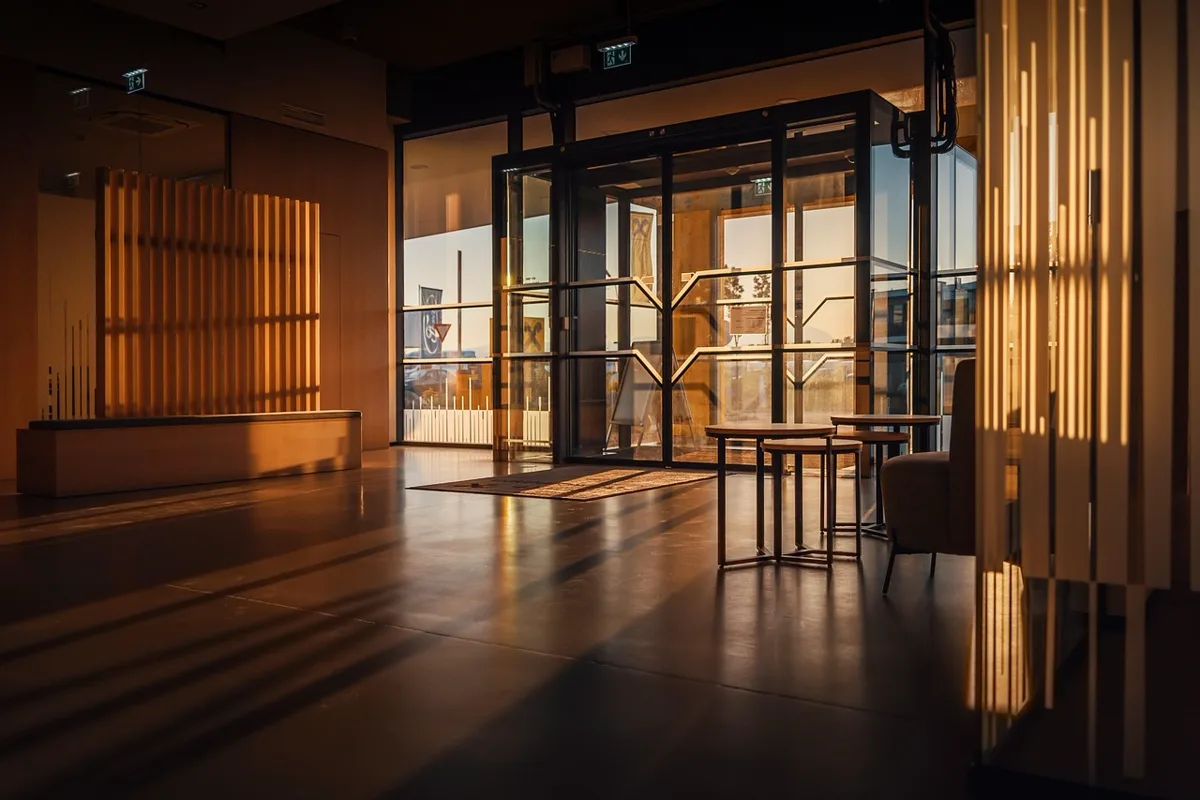
Glass walls around meeting rooms provide sound isolation while maintaining visual connectivity with the broader office. This transparency helps remote participants feel connected to the energy and culture of the physical workplace, even through a screen. It also allows in-office colleagues to see when rooms are occupied or available, improving space utilization.
Optimizing for Video Conferencing
Video conferencing has become the primary communication channel for distributed teams, and office design must support it at every level. This means going beyond dedicated conference rooms to create a comprehensive ecosystem of spaces where individuals and small groups can take video calls effectively without disrupting adjacent work areas.
Phone booths and single-person video pods provide quiet, acoustically isolated spaces for individual calls. Huddle rooms with two to four seats serve small group conversations that benefit from a shared physical environment. And purpose-built hybrid meeting rooms handle larger team sessions with multiple remote participants, equipped with professional-grade audiovisual technology.
In all of these spaces, acoustic performance is paramount. Background noise and cross-talk are the enemies of effective video communication, and even subtle acoustic issues that go unnoticed in person become amplified and distracting through microphones. Glass architectural walls from systems like the moodwall P3 and P4 deliver the sound isolation needed to prevent cross-talk and background noise from disrupting calls, while their transparency ensures that these spaces feel integrated with the rest of the office rather than isolated from it.
Glass Architectural Walls as a Design Strategy
Glass architectural walls serve a dual purpose in hybrid office design. Functionally, they provide the acoustic boundaries that video-centric workstyles demand. Aesthetically, they preserve the visual openness and natural light flow that make the physical office an attractive destination for hybrid workers who have the choice of working from home.
When employees have the option of working remotely, the quality of the physical environment becomes a powerful draw. Bright, transparent, well-designed spaces encourage in-person attendance by offering an experience that cannot be replicated at home: the energy of a vibrant workplace, the spontaneity of face-to-face interaction, and the visual stimulation of a thoughtfully designed environment.
The moodwall P1 system is particularly well-suited to hybrid environments, where its minimalist profile maximizes glass area and light transmission, creating the open, inviting atmosphere that draws people in. For spaces requiring higher acoustic performance such as dedicated video conference rooms, the moodwall P4 provides double-glazed configurations with STC ratings up to 45, ensuring crystal-clear audio for every call.
Creating Casual Meeting Spaces
Not every hybrid interaction needs a formal meeting room. Some of the most productive exchanges happen informally, in casual settings that encourage spontaneous conversation and connection. Lounge areas, cafe-style seating, and open collaboration zones give hybrid workers inviting spaces for quick check-ins, brainstorming sessions, and the social interaction that builds team cohesion.
These casual spaces are essential for maintaining company culture in a hybrid environment. When in-office days become opportunities for connection and collaboration rather than simply a mandate to fulfill, employees are more likely to embrace hybrid arrangements enthusiastically. The physical environment should celebrate the value of being together, offering experiences and interactions that are simply better in person.
Bringing It All Together
Effective hybrid office design is about intentionality. Every space should serve a clear purpose, whether it is focused work, formal meetings, casual collaboration, or video conferencing. Glass architectural walls help define these zones while maintaining the visual coherence and openness that make the office a place people actively choose to be.
Let Rampart help you design a hybrid-ready workspace. Request a quote to explore moodwall solutions tailored to your hybrid work strategy.